 gr8dne.com – Top News Features & Global Headlines
 gr8dne.com – Top News Features & Global Headlines
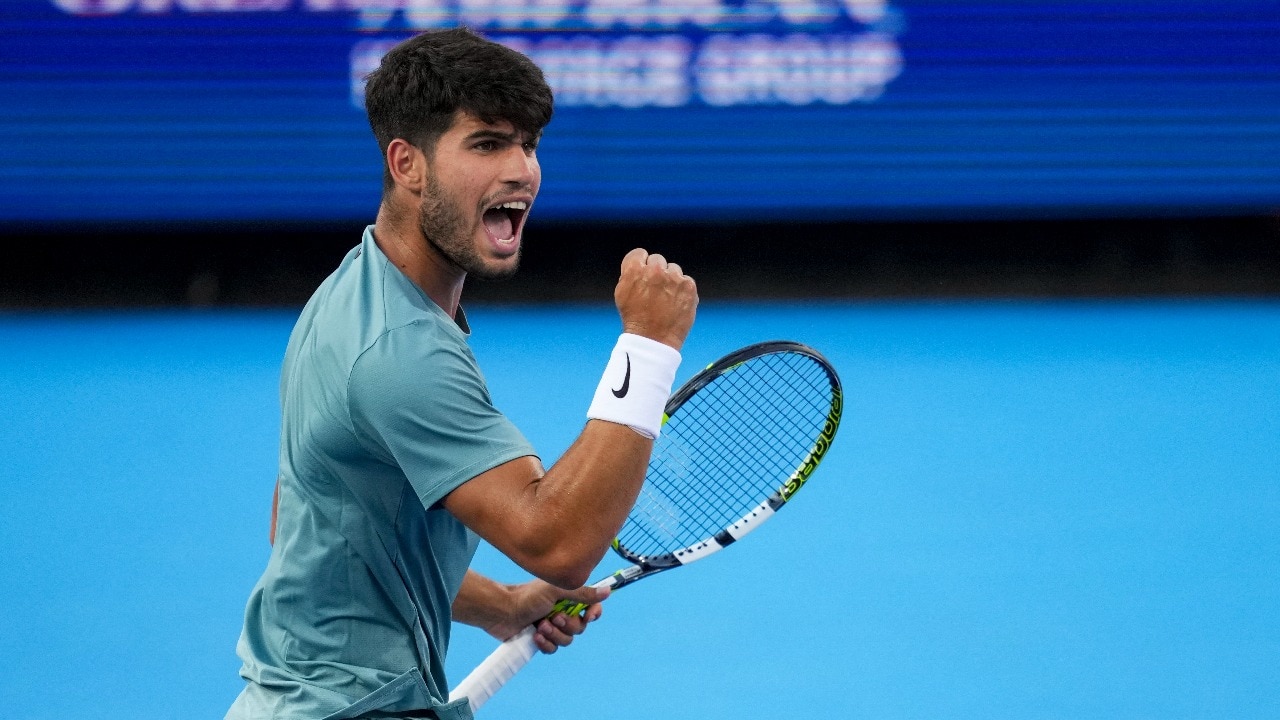
At just 19, Carlos Alcaraz burst onto the tennis scene by winning the 2022 US Open, becoming the youngest-ever ATP World No.1 and first teen to hold the top ranking.
Since then, he’s claimed four more Grand Slams—Wimbledon twice (2023, 2024) and the French Open twice (2024, 2025). Yet hard courts have remained his stumbling block—he’s failed to clinch another title on that surface since his breakthrough as a teenager. Now, Alcaraz returns to New York hungry to reclaim Grand Slam glory on hard courts.
Can he vanquish the spectre of inconsistency and rediscover his winning form at Flushing Meadows? Can Alcaraz convert his recent momentum into US Open magic once more?
After winning the US Open in 2022, his only semifinal appearance on the surface without reaching the final came a year later, at the 2023 US Open. That run ended in disappointment when he was beaten in four sets by Daniil Medvedev, denying him a chance to face Novak Djokovic in the final.
Also Read: US Open: Carlos Alcaraz can reclaim No.1 ranking from Jannik Sinner. Here's how
The loss was significant because it underlined how even the most precocious talents can stumble on the biggest stages of hard-court tennis. Last year, Alcaraz was stunned by Botic van de Zandschulp of the Netherlands in the second round.
At the Australian Open, Alcaraz is yet to make a semifinal, with injuries and early exits preventing deeper runs. This means that, across the two hard-court majors, the 2023 US Open remains the lone example where he reached the semifinal but could not go further.
For a player who has conquered both clay and grass with Grand Slam titles, this stands out as an unusual gap in his growing resume.
It raises pressing questions: why has Alcaraz not been able to translate his all-surface brilliance into more consistent hard-court Slam success? And will the US Open 2025 or finally bring the breakthrough?
In 2025, Carlos Alcaraz solidified his status as one of tennis’s brightest stars. He successfully defended his French Open title in a historic five-set thriller against Jannik Sinner—saving three championship points and mounting a comeback from two sets down in the longest Roland Garros final ever.
At Wimbledon, he reached his third consecutive final but was edged out by Sinner in four sets. Overall, Alcaraz has captured six titles in 2025, including four "Big Titles"—three ATP Masters 1000 crowns (Monte-Carlo, Rome, Cincinnati) plus his French Open triumph.
This impressive form, marked by remarkable resilience and consistent dominance on the biggest stages, positions him as a major contender heading into the US Open. If he maintains this momentum, he’ll be poised not only for more Grand Slam glory but also a crack at the world No. 1 ranking.
Alcaraz enjoyed a stroke of fortune in Cincinnati when World No.1 Jannik Sinner was forced to withdraw from the final due to injury. While it was hardly the ideal way to clinch a title, Alcaraz will take immense confidence from lifting the trophy—his first in Cincinnati.
Now, the challenge shifts to New York. Unlike his commanding runs at Wimbledon and Roland Garros, the US Open is yet to see Alcaraz at his dominant best. But with momentum firmly on his side and his game peaking at the right moment, Flushing Meadows 2025 could well be his most convincing campaign yet.
Newer articles
Older articles

 Samsung Galaxy A35 5G and A55 5G: Full Pricing and Specs Revealed
 Expert Tips to Help Kids Sharpen Focus and Combat Distractions
 Warning Signs: 5 Clues Your Body May Be Signaling Prediabetes
 Infrequent Bowel Movements: When Is It Time to Worry? A Guide to Healthy Digestion
 Oral Cancer: Spotting the Signs, Understanding the Risks, and Why Early Detection is Critical
 Shimron Hetmyer's Last-Gasp Six Stuns MI New York, Orcas Complete Record MLC Chase
 SA20 Teams Allowed Up to Six Player Retentions, Enhanced by New RTM Card and Increased Salary Cap for Upcoming Auction
 Science-Backed: 5 Simple Daily Habits for a Healthier Heart
 Cervical Cancer: Don't Ignore These 5 Subtle Warning Signs
 Brain's Eye View: Study Shows We See the World 15 Seconds in the Past
OR
The 15-Second Delay: How Your Brain Creates a Seamless, But Delayed, Reality
Brain's Eye View: Study Shows We See the World 15 Seconds in the Past
OR
The 15-Second Delay: How Your Brain Creates a Seamless, But Delayed, Reality